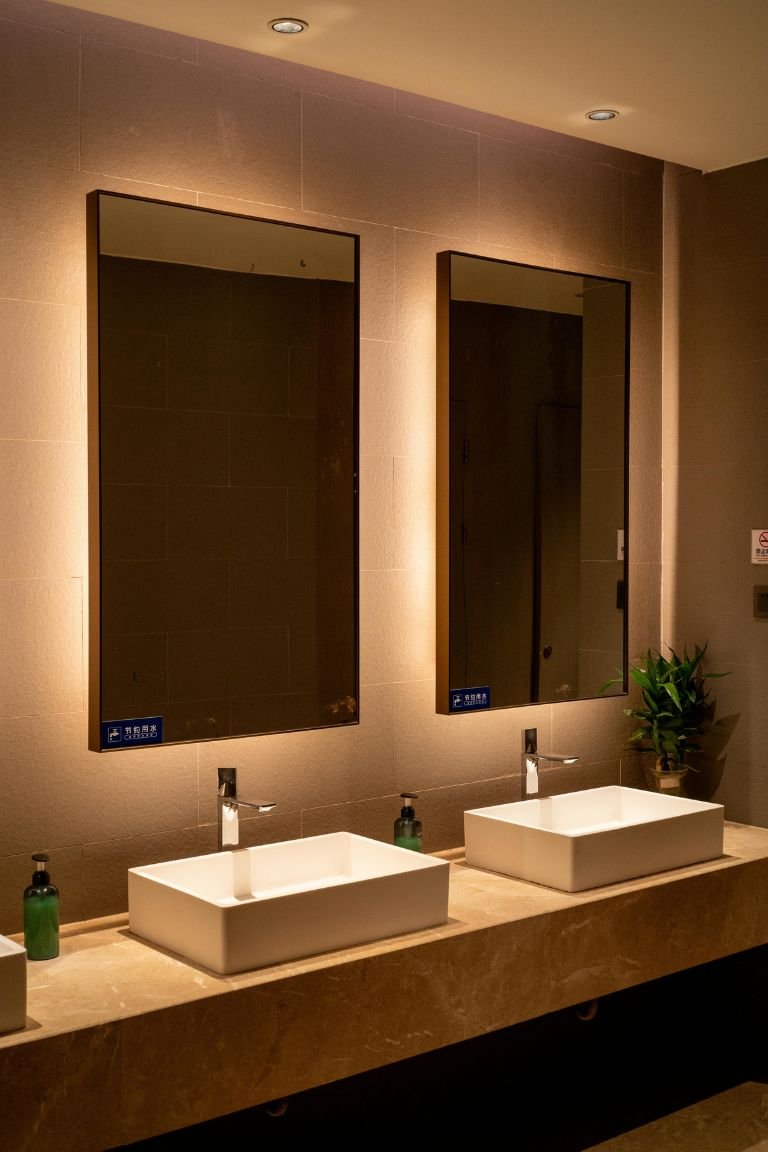
Lighting is one of the most underestimated aspects of bathroom design. It’s easy to assume that one overhead bulb and a mirror light will suffice — but thoughtful lighting goes well beyond basic illumination. In fact, lighting impacts everything from how a space feels emotionally to how well you can perform everyday tasks like shaving or applying makeup.
In bathrooms, where both function and ambience matter, lighting should be intentional, layered, and adaptable. This means considering multiple light sources and how they interact throughout the day and night.
Below, we explore why bathroom lighting truly matters — both practically and aesthetically — and how to choose lighting that enhances your daily routines.
Lighting Affects Mood and Perception of Space
Colours, textures, and spatial perception in a bathroom are all influenced by lighting. Poor lighting can make even a well-designed bathroom feel cold, small, or unwelcoming.
Warm, diffused lighting, on the other hand, can make surfaces feel softer and spaces feel larger. This is especially valuable in bathrooms without natural light.
| Lighting Quality | Visual Impact | Emotional Effect |
|---|---|---|
| Harsh overhead light | Sharp shadows, flat perception | Clinical or unwelcoming |
| Layered warm lighting | Balanced highlights and shadows | Calm and comfortable |
| Focused task lighting | Clear detail where you need it | Functional and pleasant |
Lighting that feels good to be in changes how you experience the space every time you enter it.
Different Tasks Require Different Light
One of the reasons good lighting design matters is that bathrooms are multifunctional. You need bright, even lighting for some tasks, and softer, indirect lighting for others.
Here are the main lighting functions to consider:
- Ambient lighting: Provides overall illumination.
- Task lighting: Bright, focused light for specific activities like grooming.
- Accent lighting: Light that highlights architectural details or adds mood.
When these layers work together, the result is both practical and beautiful.
Where People Go Wrong With Bathroom Lighting
A common mistake is relying solely on one overhead source plus a mirror light. While this might technically illuminate the room, it often produces shadows and uneven light, especially around the face and mirror.
Other pitfalls include:
- Using lighting that’s too bright for evening use
- Failing to consider colour temperature
- Ignoring moisture ratings for fixtures
- Placing lights where they create glare instead of gentle illumination
All of these issues can make a bathroom feel harsher or less comfortable — even if it looks great in photos.
Colour Temperature Isn’t Just a Technical Detail
Light bulbs are often categorised by colour temperature, measured in Kelvin (K). Lower numbers produce warmer, golden light. Higher numbers create cooler, more clinical light.
| Kelvin (K) | Type of Light | Best Uses in Bathrooms |
|---|---|---|
| 2700K–3000K | Warm White | Ambient and mood lighting |
| 3000K–3500K | Neutral White | Main lighting, balanced and comfortable |
| 3500K–4100K | Cool White | Task lighting, detail work |
Choosing the right colour temperature affects how colours — including skin tones — look in the mirror. Neutral light (around 3000K–3500K) is often the best compromise for bathrooms that serve multiple purposes.
Layered Lighting Makes Everyday Use Better
Layering light means using more than one light source so that each complements the other. This prevents harsh shadows and creates flexibility.
- Ceiling-mounted ambient lights: Provide even lighting for the whole room.
- Wall sconces or mirror lights: Illuminate faces without shadows.
- LED strips under cabinets: Add a soft glow for nighttime use.
This layered approach makes the space functional in the morning, soft in the evening, and relaxing at night.
Consider Dimmers for Greater Control
Dimmers are one of the simplest yet most impactful upgrades you can make in bathroom lighting. They allow you to adjust brightness without changing fixtures or bulbs.
Having the flexibility to shift from bright, focused light for morning routines to softer, warm light for a relaxing bath can dramatically change how you use the space — and how it feels.
Safety and Moisture Ratings Matter
Bathrooms are humid environments. Not all light fixtures are designed for moisture, and choosing the wrong kind can be unsafe or cause premature wear.
Look for fixtures with appropriate IP ratings — especially near showers or tubs. This ensures that lights are built to withstand steam and splashes without compromising safety.
| IP Rating | Meaning | Where to Use |
|---|---|---|
| IP44+ | Splash resistant | Near sinks, vanities, general bathroom |
| IP65+ | Water resistant | Near showers, bathtubs |
Proper ratings are often overlooked but are essential for longevity and safety.
Final Thoughts
Bathroom lighting significantly impacts how a space feels and functions. When you consider colour temperature, layering, task-specific lighting, and safety ratings, lighting becomes a design element rather than a technical afterthought.
Ultimately, good lighting supports daily routines, enhances comfort, and reveals the best qualities of your materials and finishes. Whether you’re renovating or updating a few fixtures, thoughtful lighting makes your bathroom feel calmer, more welcoming, and more useful — every day, at every hour.