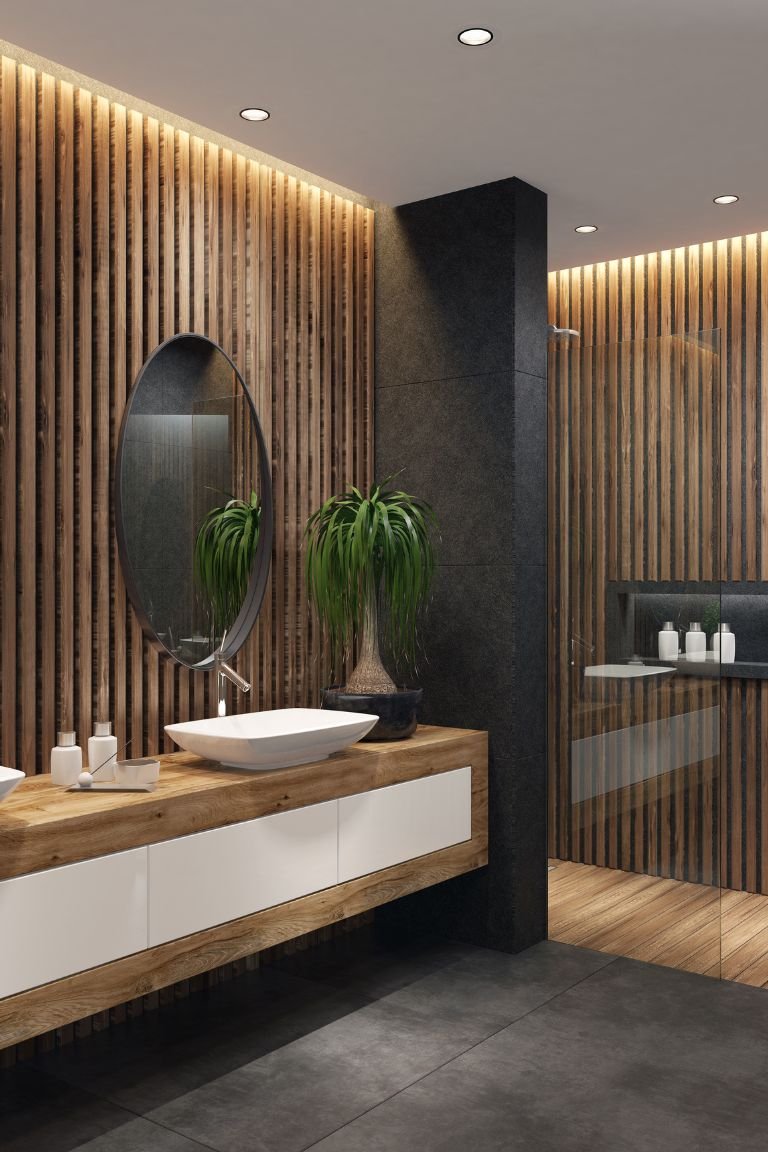
Bathroom design often gets framed as a choice between two extremes: clean, minimal spaces or warm, layered ones filled with texture and personality. In reality, the most successful bathrooms rarely sit fully at either end of that spectrum.
A bathroom that’s too minimal can feel cold or impersonal, while one that leans too heavily into warmth can start to feel visually busy — especially in smaller spaces. The key is balance. When minimal structure is softened with warmth, the result is a bathroom that feels calm, inviting, and easy to live with.
Understanding how these two styles work — and where they overlap — helps you make more confident design decisions that stand the test of time.
What Defines Minimal Bathroom Design?
Minimal bathroom design focuses on simplicity, clarity, and function. The goal is to reduce visual noise so the space feels open and effortless.
Common characteristics include:
- Neutral or monochromatic color palettes
- Clean lines and uncluttered surfaces
- Limited materials used consistently
- Integrated or hidden storage
Minimal bathrooms often feel spacious and orderly, which is especially helpful in compact layouts. As discussed in small bathroom design ideas that feel calm and uncluttered, reducing visual breaks can dramatically change how a space feels.
However, minimalism can sometimes tip into feeling sterile if warmth isn’t intentionally introduced.
What Makes a Bathroom Feel Warm?
Warm bathroom design prioritizes comfort and emotional ease. It focuses on materials, tones, and textures that make the space feel welcoming rather than stark.
Warmth can come from:
- Wood or wood-look finishes
- Soft, warm neutrals instead of cool whites
- Textured tiles or stone
- Layered lighting
These elements are often highlighted in spa-inspired spaces, where comfort matters just as much as function. In fact, many of the principles discussed in creating a spa-like bathroom at home rely on warmth to balance clean design.
Why Extreme Minimalism Can Feel Uninviting
While minimal bathrooms photograph beautifully, living with them is a different experience. Highly polished surfaces, sharp contrasts, and overly cool lighting can make daily routines feel rushed or uncomfortable.
Without warmth, minimal bathrooms may:
- Highlight echoes and sound harshness
- Feel cold underfoot and to the touch
- Lack visual softness
- Show wear and water marks more easily
This is where thoughtful material selection becomes important. Choosing finishes that age well — such as those discussed in our guide to bathroom materials that age well — can help soften minimal designs without adding clutter.
Why Too Much Warmth Can Feel Overwhelming
On the other end of the spectrum, bathrooms that layer too many textures, colors, or finishes can quickly feel crowded. This is particularly noticeable in smaller bathrooms where visual space is limited.
Excessive warmth can result in:
- Too many competing materials
- Busy tile patterns
- Overdecorated surfaces
- Reduced sense of visual calm
Without structure, warmth loses its grounding effect. Minimal design principles help provide that structure.
How to Balance Minimal Structure With Warm Details
The most successful bathrooms use minimal design as a framework and layer warmth intentionally. This approach keeps the space visually calm while still feeling comfortable and personal.
| Minimal Element | Warm Counterbalance |
|---|---|
| Neutral walls | Warm wood vanity or shelving |
| Simple tile layout | Textured or matte tile finish |
| Clean-lined fixtures | Brushed or soft metal finishes |
| Open floor space | Soft textiles like towels or bath mats |
This balance allows each element to breathe while contributing to an overall sense of calm.
Lighting Plays a Critical Role in Balance
Lighting often determines whether a bathroom feels minimal or warm — regardless of materials. Bright, cool lighting emphasizes minimalism, while softer lighting brings warmth.
Layered lighting helps bridge the gap. If lighting feels too harsh, even the warmest materials won’t feel inviting. This is why understanding lighting principles matters, as explored in why bathroom lighting matters more than you think.
Using dimmers, warm LED temperatures, and indirect light sources allows the same space to feel functional during the day and relaxing in the evening.
Let Function Guide Style Decisions
Ultimately, the right balance depends on how you use your bathroom. Busy households may benefit from minimal layouts that are easy to maintain, while primary bathrooms often benefit from added warmth for relaxation.
Starting with function — rather than aesthetics alone — helps avoid regret. Planning carefully, as outlined in this bathroom renovation planning guide, makes it easier to choose where minimalism ends and warmth begins.
Final Thoughts
Minimal and warm bathroom design aren’t opposing choices — they’re complementary tools. When minimal structure supports warm materials, textures, and lighting, the result is a bathroom that feels calm, welcoming, and easy to live with.
By resisting extremes and focusing on balance, you create a space that looks timeless, functions well, and feels genuinely comfortable every day.