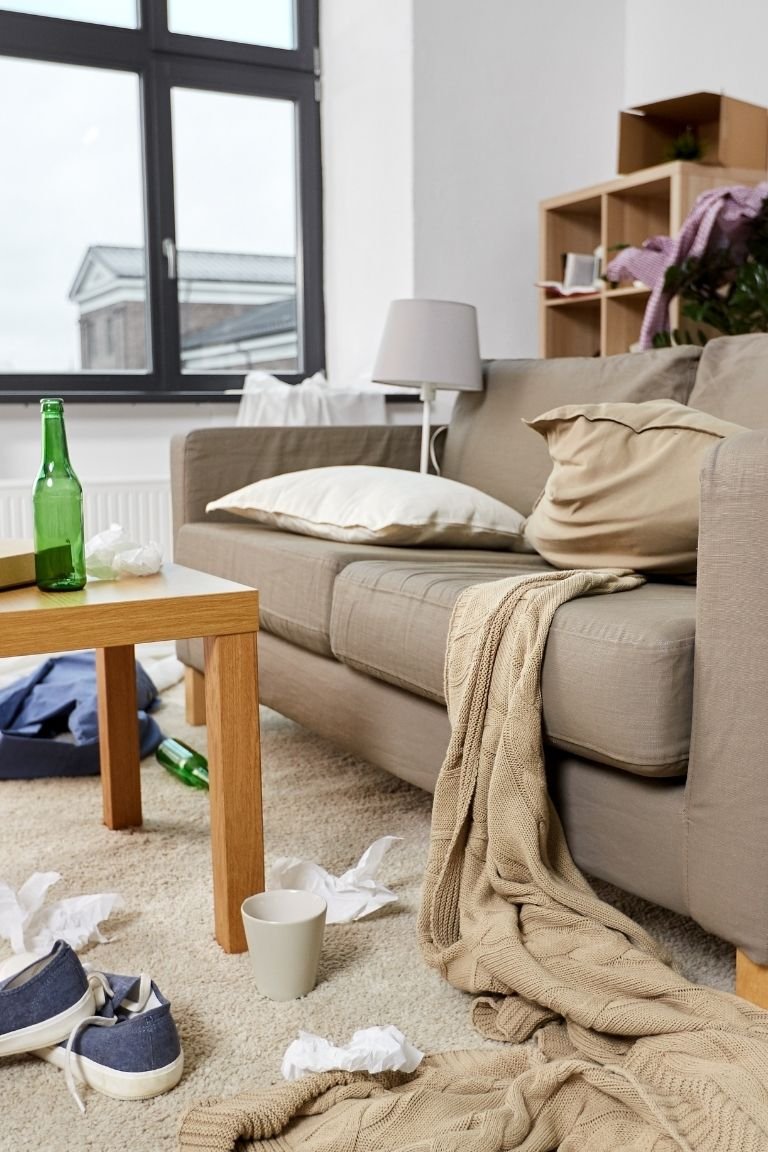
A beautifully designed living room can still feel unsettled if decor choices create visual noise, disrupt flow, or interfere with comfort. Even small details — like mismatched accents or overcrowded shelves — can unintentionally make a space feel chaotic rather than calm.
This post explores common decor mistakes that reduce calm in living rooms and practical fixes that help your space feel intentional, balanced, and genuinely inviting.
If you’re also thinking about lighting design, our Living Room Lighting Ideas That Create Ambience and Function article pairs beautifully with this post — lighting and decor work together to shape mood and comfort.
1. Too Many Small Decorative Items
Decor that’s meant to add personality can backfire when there are too many small pieces scattered across tables, shelves, and mantels. Rather than enhancing the space, this creates visual clutter that fragments the eye.
How to Fix It:
- Choose a few meaningful items and group them together instead of spreading items everywhere.
- Use trays or shallow bowls to corral smaller pieces on coffee tables or shelves.
- Aim for intentional spacing so each piece has room to “breathe.”
Grouping items with purpose keeps the eye from feeling overwhelmed and helps the room feel more collected.
2. Mismatched or Competing Styles
When furniture and decor pieces come from too many different styles — rustic, modern, glam, farmhouse, etc. — the room can feel disjointed, which disrupts visual calm.
How to Fix It:
- Identify one dominant style you want to anchor the room.
- Use complementary pieces that reinforce that style or blend subtly rather than clash.
- If you love mixing styles, do so with intention — unify disparate pieces with a consistent palette or texture.
This creates a cohesive look that feels purposeful rather than chaotic.
3. Ignoring Scale and Proportion
Decor may be beautiful on its own, but if it’s the wrong scale for your room or furniture, it can feel out of place. Too many tiny items on a large wall, or a massive piece in a small nook, disrupts harmony.
How to Fix It:
- Use decor that’s scaled to your furniture and the room’s proportions.
- For walls, larger artworks or groupings at eye level feel more intentional than many tiny pieces scattered around.
- Ensure that tabletop decor is sized for the surface — small items get lost on large tables.
Scale and proportion help the room feel balanced and composed.
4. Overuse of Busy Patterns
While patterns add interest, too many competing or high-contrast patterns can overwhelm the space and reduce calm.
How to Fix It:
- Limit yourself to one or two patterns — use them thoughtfully in rugs, throws, or pillows.
- Pair patterned pieces with solid, neutral backgrounds to create visual breathing room.
- Choose larger-scale patterns to feel more intentional and less chaotic.
A subtle pattern can add depth without making the room feel visually noisy.
5. Cluttered Open Shelving
Open shelving can feel light and airy — but only when curated. Shelves filled with too many random books, trinkets, or mismatched items create visual clutter.
How to Fix It:
- Group like items together (e.g., books by color or size).
- Add baskets or bins to hide smaller, less attractive items.
- Leave intentional gaps to help the eye rest.
Well-curated shelves feel balanced and elevate calm rather than detract from it.
6. Disconnected Color Palette
A living room with too many unrelated colors — or colors that compete with each other — can feel visually unsettled.
How to Fix It:
- Choose a cohesive palette with one dominant neutral and two complementary accent colors.
- Repeat accent hues across textiles, art, and decor to unify the space.
- A calm base palette makes decorative pops feel intentional, not chaotic.
For ideas on calming color choices that enhance comfort and style, see our Living Room Color Palettes That Promote Relaxation and Style article.
7. Ignoring Negative Space
Negative space — the empty areas around objects — is as important as the items themselves. Crowding every wall, table, or shelf removes the visual breathing room that contributes to calm.
How to Fix It:
- Leave some walls or surfaces intentionally blank.
- Use larger decor pieces instead of many small ones to create easier visual movement.
- Let negative space help balance the room’s flow and rhythm.
Negative space creates a sense of order that supports serenity.
8. Hanging Art Too High (or Too Low)
Art that’s positioned incorrectly disrupts sightlines and feels awkward, making the room seem unbalanced.
How to Fix It:
- Aim to hang artwork so the center is at eye level (around 57–60 inches from the floor).
- For groupings, ensure the overall cluster reads as one piece rather than scattered dots.
- Align art with key elements like furniture tops or focal walls.
Properly positioned art feels calm, intentional, and connected to the room’s human scale.
9. Too Many Textures Without Cohesion
Texture adds warmth and depth, but when random textures are piled together, the room can feel busy.
How to Fix It:
- Choose a few complementary textures (e.g., wool, linen, natural wood).
- Repeat texture in different areas to unify the look.
- A balanced mix feels layered and rich without being visually overwhelming.
Texture should enhance comfort, not cloud it.
10. Forgetting Function for the Sake of Decor
Beautiful items that interfere with everyday use — like fragile or impractical decor right in a traffic zone — reduce comfort and calm.
How to Fix It:
- Keep high-traffic areas clear of delicate objects.
- Choose decor that feels purposeful or personal rather than purely ornamental.
- Design with how you *live* in the room, not just how it looks.
A lived-in, thoughtful space feels calm and welcoming — and still looks beautiful.
Final Thoughts
Calm living room design isn’t about minimalism — it’s about intentionality. Avoiding these common decor mistakes and applying thoughtful tweaks creates a space that feels cohesive, functional, and emotionally comfortable.
When each element supports both how you live and how you feel, the living room becomes not just stylish, but genuinely inviting — the heart of your home.