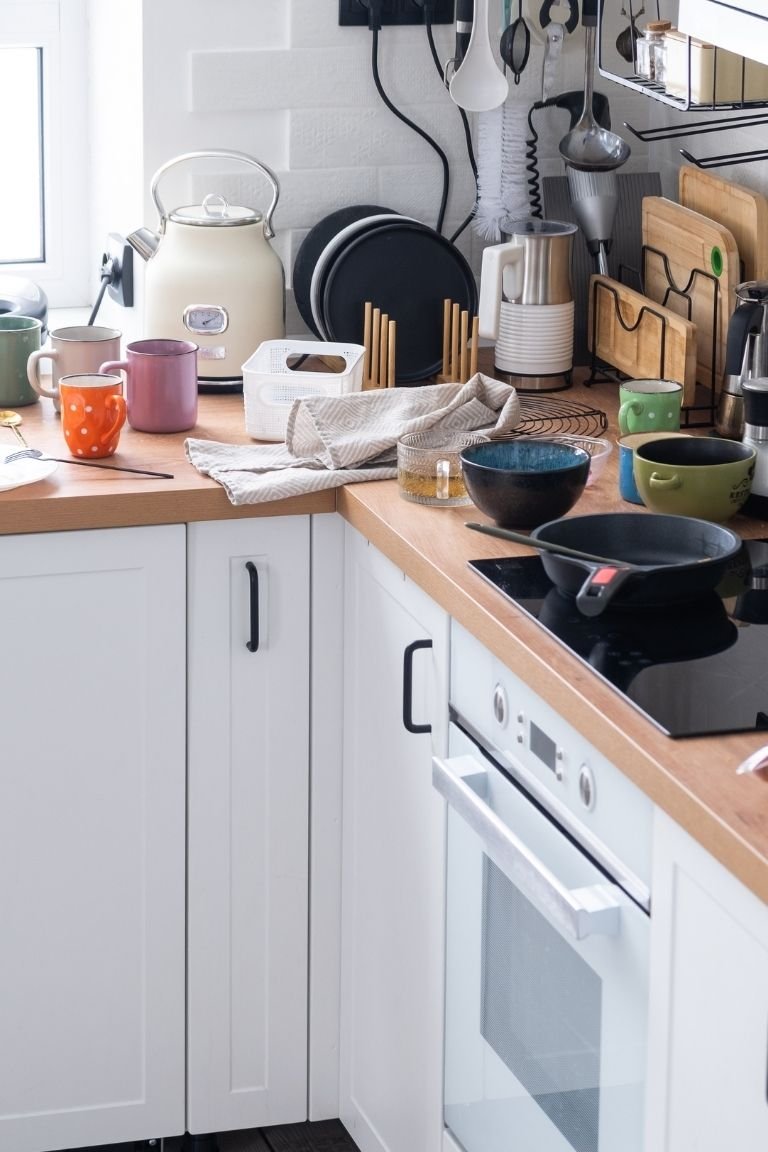
A kitchen can be well-planned in terms of layout and function, but still feel visually chaotic or stressful if the decor isn’t chosen with intention. Visual noise — too many small objects, clashing finishes, or inconsistent styles — disrupts calm and makes the space feel harder to use and enjoy.
In kitchens, decor should support calm and function, not compete with them. Below are common kitchen decor mistakes that reduce calm — and how to fix them so your space feels more intentional and inviting.
If you’re also thinking about colors and finishes that support calm, check out Kitchen Colors and Finishes That Make the Space Feel Calm and Inviting, which explores harmonious palette strategies.
1. Too Many Competing Patterns
Mixing bold or clashing patterns — whether in backsplashes, rugs, or textiles — can make a kitchen feel busy and visually overwhelming.
How to Fix It:
- Stick to one or two subtle patterns at most.
- Use neutrals as the foundation and reserve pattern for accents.
- Choose patterns with similar color tones to maintain cohesion.
For example, a patterned rug can look beautiful when paired with a calm, neutral backsplash and consistent cabinet finish.
2. Cluttered Countertops
It’s tempting to leave frequently used tools and appliances on counters, but excessive items on work surfaces interrupt flow and visual calm.
How to Fix It:
- Use storage solutions like those in Kitchen Storage Ideas That Keep Counters Clear and Stress Low to hide appliances and tools.
- Keep only daily necessities visible.
- Corral items on trays to create intentional groupings rather than scattered objects.
Clear counters make the kitchen feel larger, calmer, and easier to work in.
3. Mismatched Metal Finishes
Using a dozen different metal finishes (hardware, faucets, lighting, appliances) creates visual dissonance that can feel chaotic.
How to Fix It:
- Choose one dominant metal finish (e.g., brushed nickel, matte black, soft brass).
- Use one complementary finish at most for subtle contrast.
- Repeat the chosen finishes throughout the space for cohesion.
Consistent metal finishes help the eye move calmly across surfaces instead of being visually interrupted by random shifts in shimmer or tone.
4. Overuse of Open Shelving
Open shelving can feel light and inviting, but when every shelf is full of mismatched items, it becomes cluttered and visually noisy.
How to Fix It:
- Curate what you display — keep only aesthetically cohesive items on view.
- Use matching dishware or storage containers for a unified look.
- Leave negative space between groupings to give the eye place to rest.
Open shelving works best when intentionally styled; otherwise, it contributes to clutter rather than calm.
5. Mixed Color Temperatures in Lighting
Having different color temperatures in your lighting — warm dinners, cool task lights, and daylight bulbs — creates visual dissonance that interrupts atmosphere.
How to Fix It:
- Use consistent color temperature bulbs (2700K–3000K for a warm, inviting glow).
- Layer lighting (ambient, task, accent) with dimmers for different moments.
- Avoid mixing cool white and warm white in the same space.
Warm lighting unifies design and supports the sense of calm, especially in kitchens with warm-focused palettes.
6. Decorative Items Without Purpose
Decor that doesn’t serve a purpose — or feels purely decorative — tends to create visual distraction rather than enhancing the space.
How to Fix It:
- Choose decor that has meaning or function, such as ceramics, baskets, or cookbooks you actually use.
- Limit objects to curated vignettes rather than random placements.
- Pair decorative items with purposeful storage or lighting.
For example, a few well-chosen cookbooks or a vase with fresh herbs feels intentional and welcoming, while a shelf full of random trinkets feels cluttered.
7. Too Many Small Appliances on Display
Small appliances (toasters, mixers, coffee machines) can quickly dominate visuals when left on counters. While convenience matters, visual cohesion matters too.
How to Fix It:
- Store small appliances in cabinets or lift-out trays when not in use.
- Group appliances on a designated tray if they must stay out.
- Choose appliances that match your kitchen’s color and finish palette.
This approach keeps counters clean and makes the kitchen feel more refined.
8. Inconsistent Tile or Backsplash Choices
Using multiple tile types, grout colors, or clashing patterns makes visual flow feel disjointed.
How to Fix It:
- Choose one consistent tile type for the main backsplash area.
- If you use accent tiles, make them subtle and tied to the main palette.
- Match grout colors closely to tile tones for a seamless feel.
A cohesive backsplash supports calm and complements cabinet and countertop choices.
9. Ignoring Negative Space
Negative space — the empty areas around objects — helps reduce visual noise and gives the eye a place to rest. Crowded shelves, counters, and walls remove that calm visual buffer.
How to Fix It:
- Embrace empty space as intentional design.
- Use larger, unbroken surfaces where possible.
- Balance statement pieces with open areas.
Negative space improves both calm and clarity — making the kitchen feel larger and less chaotic.
10. Forgetting Practicality for Looks
Decor choices that look pretty but interfere with function — such as fragile objects near cooking zones or heavy art over prep spaces — reduce comfort and usability.
How to Fix It:
- Keep decor away from heat, water, or high-traffic areas.
- Choose items that feel light but won’t easily get damaged.
- Balance beauty with durability and purpose.
Practical decor feels high-end because it enhances everyday life rather than complicating it.
Final Thoughts
Calm kitchen design is the result of intentional choices — where every object, texture, and finish contributes to comfort and clarity. Avoiding these common decor mistakes and applying thoughtful fixes creates a kitchen that feels both inviting and functional.
When design supports usage — instead of competing with it — your kitchen becomes not just visually appealing, but emotionally comfortable and easy to live in.