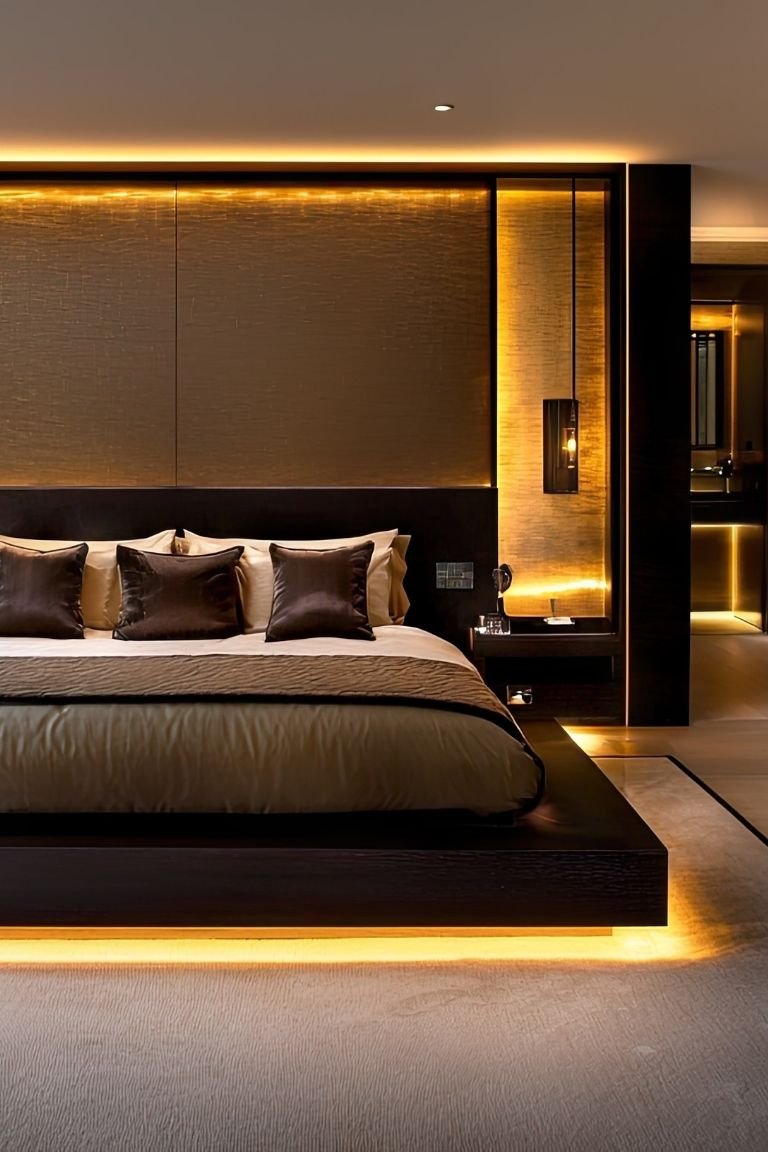
Lighting in your bedroom does more than simply illuminate the space. It affects mood, circadian rhythm, comfort, and how easily you transition from waking to sleep and back again. Good bedroom lighting should be adaptable — supporting bright morning routines and soft, calming evenings without glare or shadows.
Unlike a single overhead bulb, layered and intentional lighting can elevate both the functionality and emotional feel of the room. Before diving into specifics, if you haven’t already read Bedroom Design Ideas That Promote Better Sleep and Relaxation, that post offers foundational context for why lighting matters so much.
Understanding the Role of Lighting in Sleep and Wake Cycles
Our bodies respond to light cues throughout the day. Bright, cool light can help signal wakefulness in the morning, while warm, dim lighting cues the body that it’s time to slow down and prepare for rest.
This biological relationship makes lighting an important part of bedroom design. With layers of light — ambient, task, and accent — you can support both ends of your day naturally and gently.
1. Ambient Lighting: The Foundation
Ambient lighting provides general illumination for the entire room. It shouldn’t be harsh or clinical; instead, it should offer a base level of soft, even light.
Options for ambient lighting include:
- Warm LED ceiling fixtures
- Recessed lighting with dimmers
- Soft overhead pendants
Installing a dimmer switch allows you to tailor the ambient light throughout the day — brighter in the morning and softer at night. This adaptability makes routines feel more seamless and relaxing.
2. Task Lighting: Practical and Adjustable
Task lighting focuses on areas where you need clear illumination for specific activities. In a bedroom, this is most often at the bedside or near a dresser or vanity.
Consider these task lighting options:
- Bedside table lamps
- Adjustable wall sconces
- Directional reading lights
When choosing task lighting:
- Opt for warm-white bulbs (around 2700K–3000K) to avoid blue-light stimulation at night
- Choose adjustable fixtures so you can direct light exactly where needed
Wall sconces or swing-arm lights free up bedside surface space and provide flexible lighting for nighttime reading or early-morning tasks.
3. Accent Lighting: Mood and Atmosphere
Accent lighting isn’t necessary for visibility, but it plays a powerful role in creating atmosphere. It enhances architectural features and adds depth without overpowering the rest of your lighting scheme.
Try adding:
- LED strips behind a headboard
- Under-cabinet or shelf lighting
- Low-voltage accent fixtures near artwork or textured walls
Accent lighting should be soft and subtle. By placing it strategically, you make the space feel warmer and more layered, which supports evening relaxation.
Lighting Strategies for Different Times of Day
A great bedroom transitions effortlessly from bright morning routines to subdued evening ambiance. Here’s how to layer lighting effectively:
| Time of Day | Lighting Approach | Goal |
|---|---|---|
| Morning | Bright ambient + focused task | Wakefulness and clarity |
| Afternoon | Balanced ambient | Comfort and visibility |
| Evening | Warm, dimmed light + accent | Calm and relaxation |
Using dimmers on both ambient and task lighting makes these transitions smoother and more intuitive. It also ensures that your bedroom feels welcoming and restful rather than harsh or jarring.
Color Temperature: Warm Vs. Cool Light
Color temperature is measured in kelvins (K). Lower values produce warm, amber-toned light, while higher kelvin ratings produce cooler, bluer light. For bedrooms, warmer tones are most conducive to relaxation:
- 2700K–3000K: Inviting and cozy — ideal for evenings
- 3000K–3500K: Neutral and practical — suitable for mornings and overall use
By choosing bulbs in this range, your bedroom lighting blends comfort with function — soft and calming at night, clear without being harsh in the morning.
Natural Light: Make the Most of It
Natural light has a huge impact on how a bedroom feels throughout the day. When possible:
- Position your bed or seating to benefit from soft morning light
- Use sheer or light-filtering window treatments to diffuse sunlight
- Incorporate heavy drapes or blackout curtains for restful sleep at night
Natural light not only reduces the need for artificial lighting during the day, it also supports your body’s circadian rhythm — reinforcing when it’s time to wake and when it’s time to rest.
Consider Lighting Fixtures as Part of Design
Lighting fixtures can also be design elements. Thoughtfully chosen lamps, sconces, or pendants contribute to visual interest while reinforcing the room’s calming mood.
For instance, soft-textured lamp shades, matte metal finishes, and subtle diffusers can make light feel gentle and cohesive with your bedroom’s design. Choose fixtures that feel intentional, rather than purely functional.
Placement Matters: Avoid Shadows and Glare
Even high-quality bulbs can create an uncomfortable bedroom experience if placed poorly. Avoid placing bright sources directly above where you sit or lie, which can produce shadows or glare.
- Place task lights at comfortable reading height
- Keep ambient lighting diffused
- Avoid overly bright overhead fixtures during evening routines
Proper placement ensures that light enhances the warm, restful atmosphere you’re trying to create.
Final Thoughts
Bedroom lighting isn’t just about seeing — it’s about how light makes you feel. Warm, layered lighting supports relaxation at night and gentle waking in the morning, creating an environment that aligns with your natural rhythms.
Thoughtful lighting design enhances the calming elements of your bedroom and makes daily routines feel more intentional and less stressful. When done right, lighting transforms your bedroom into a sanctuary that supports rest, comfort, and wellbeing.