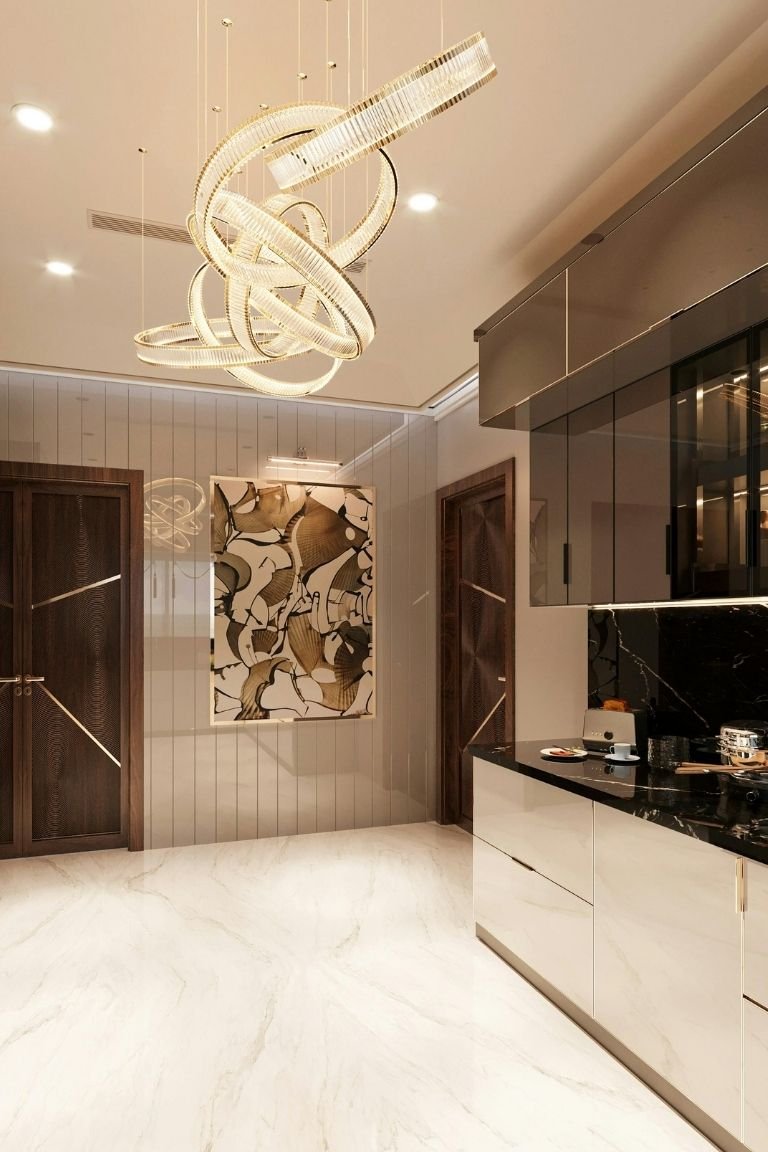
Kitchen lighting plays an essential role in both function and atmosphere. Great lighting helps you see clearly while cooking, reduces eye strain, and enhances the overall ambience of the space. Instead of relying on a single overhead light, layered lighting supports different tasks and mood settings throughout the day.
If you’re thinking about how your kitchen functions daily, you may find it helpful to read Kitchen Storage Ideas That Keep Counters Clear and Stress Low, which explores storage techniques that support a calmer space. But lighting has an equally powerful impact on how the kitchen feels and works.
Why Kitchen Lighting Matters
Lighting affects how well you can:
- Prepare and cook food safely
- Clean and maintain surfaces
- See colors accurately
- Transition from day to evening tasks
Good kitchen lighting balances practicality with comfort — it should clearly illuminate work surfaces without creating harsh shadows or glare, while also contributing to the mood of the space.
Layered Lighting: The Foundation
Effective kitchen lighting is based on layer strategies that serve different needs. The three main layers are:
- Ambient lighting: Overall illumination for the whole space
- Task lighting: Focused light for specific work areas
- Accent lighting: Soft illumination for mood and detail
Each layer contributes to both function and atmosphere, making the kitchen feel well-lit and inviting rather than uneven or too bright in only one spot.
Ambient Lighting: Even, Reliable Illumination
Ambient lighting is your kitchen’s base layer. It provides general, uniform light so the room feels open and easy to navigate.
Common ambient lighting options include:
- Recessed can lights
- Flush-mount ceiling fixtures
- LED panels
- Track lighting with adjustable heads
For larger kitchens or open-plan designs, multiple ambient fixtures help reduce shadows and maintain even lighting across the room.
Task Lighting: Clarity Where You Need It Most
Task lighting focuses on areas where specific activities occur. In kitchens, this typically includes counters, the sink, stovetop, and islands. Without proper task lighting, even a well-organized kitchen can feel difficult to use.
Popular task lighting approaches include:
- Under-cabinet lighting: Illuminates countertops for chopping, measuring, and prep
- Pendant lights over islands: Provides concentrated light where people work or gather
- Recessed lighting over key zones: Offers bright, unobtrusive task illumination
LED strips or puck lights under cabinets are especially effective because they eliminate shadows cast by overhead lights, giving you clearer visibility on work surfaces.
Accent Lighting: Mood and Detail
Accent lighting isn’t primarily about visibility — it’s about enhancing atmosphere and highlighting design details.
You can use accent lighting to:
- Highlight architectural features or open shelving
- Create warm ambient glow at night
- Enhance the look of a backsplash or textured surface
Examples of accent lighting include LED strips above cabinets, toe-kick lighting under lower cabinetry, or small fixtures that showcase decorative elements.
Color Temperature and Mood
Not all light is the same. The color temperature of bulbs — measured in Kelvins (K) — influences mood and how surfaces appear.
| Temperature (K) | Effect | Best Use |
|---|---|---|
| 2700–3000K | Warm, cozy light | Evenings and ambient layers |
| 3000–3500K | Neutral, balanced light | General kitchen use |
| 3500–4100K | Cool, bright light | Task areas requiring clarity |
Warm light (2700–3000K) feels inviting and complements wood tones and warm palettes, while slightly cooler light (3000–3500K) provides clarity for daily tasks without feeling clinical.
Pendant Lighting: Style Meets Function
Pendant lights make a statement while serving as practical task layers. Over islands or dining nooks, a set of pendants provides focused illumination and visual interest.
Consider these tips when choosing pendants:
- Hang so the bottom of the shade is about 30–36 inches above the surface
- Choose a style that complements cabinetry and finishes
- Use warm bulbs to balance brightness with comfort
Pendants are especially effective in open kitchens where they help define zones visually as well as functionally.
Under-Cabinet Lighting: Clear Prep Surfaces
Under-cabinet lighting is a simple upgrade that dramatically improves how your workspace feels. Instead of relying solely on overhead lighting, under-cabinet fixtures provide horizontal light right where it’s needed.
LED strips or puck lights:
- Support precise tasks like chopping or reading recipes
- Eliminate shadows cast by upper cabinets
- Add softness to ambient layers when dimmed
This type of lighting makes everyday tasks feel more comfortable and reduces eye strain.
Consider Dimmers for Flexibility
Dimmers are one of the most valuable lighting upgrades you can make. They let you adjust brightness throughout the day — bright enough for prep and cleanup, softer for evening gatherings.
- Sync dimmers with ambient layers for mood shifts
- Use subtle light at night to avoid harsh glare
- Save energy by reducing brightness when full light isn’t needed
With dimmers, the same fixtures serve multiple purposes without extra hardware.
Lighting and Layout: How They Work Together
Lighting should follow the kitchen’s layout, not fight it. Well-lit work zones enhance flow and function, while layered light elevates atmosphere.
For more on kitchen layout and how it affects daily routines, see How Kitchen Layout Impacts Cooking Flow and Daily Routines. Strategic lighting builds on thoughtful layout to make the space easier to use and more enjoyable to be in.
Final Thoughts
Kitchen lighting is more than a fixture choice — it’s about how the space feels and functions at different times of day. Layered lighting, thoughtful fixture placement, and attention to color temperature help the kitchen feel bright and efficient when you’re working, and warm and welcoming when you’re relaxing.
When lighting is designed with both purpose and mood in mind, daily routines become easier, and the kitchen becomes a space you *want* to spend time in — not just another room in the house.