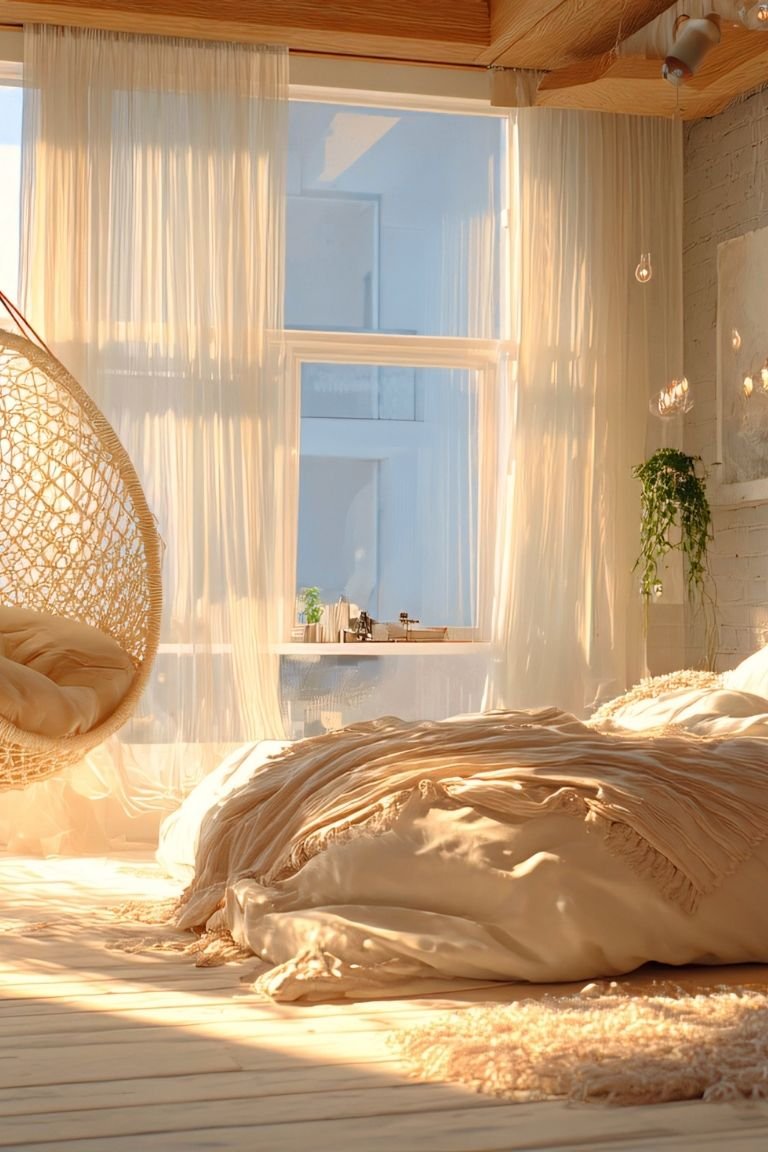
When people think about a calm bedroom, they often picture an all-white space with minimal furniture and very little personality. While simplicity can be soothing, a bedroom that lacks depth or character can start to feel flat — or even uninspiring.
The key to creating a calm bedroom without it feeling boring is balance. Calm comes from reducing visual noise, while interest comes from subtle variation in texture, tone, and form. When these elements work together, the space feels restful but still intentional.
If you’re just beginning to think about how your bedroom affects rest, our guide to bedroom design ideas that promote better sleep and relaxation offers a helpful foundation.
Start With a Soft, Cohesive Color Base
A calm bedroom benefits from a limited color palette, but that doesn’t mean everything has to match exactly. The goal is harmony, not monotony.
Choose one dominant base color — such as warm white, soft greige, or muted taupe — and build around it using closely related shades. This creates visual continuity while still allowing variation.
- Layer lighter and darker tones of the same color family
- Avoid sharp contrast between walls, bedding, and furniture
- Use darker shades sparingly to ground the space
This approach keeps the room visually calm while preventing it from feeling one-dimensional.
Use Texture to Add Depth Without Visual Noise
Texture is one of the most effective ways to add interest to a calm bedroom. Unlike bold patterns or bright colors, texture adds richness without overstimulation.
Introduce texture through:
- Woven or linen bedding
- Upholstered headboards
- Soft rugs layered over hard flooring
- Knitted throws or subtly textured pillows
These tactile elements catch light differently and create quiet variation — making the room feel layered rather than flat.
Let Furniture Shape the Mood
Furniture choices play a big role in how calm or busy a bedroom feels. Clean-lined furniture with gentle curves tends to feel more restful than sharp angles or overly ornate pieces.
To avoid boredom while keeping things calm:
- Mix solid pieces with lighter visual elements
- Choose nightstands or dressers with subtle detailing
- Balance larger furniture with negative space
Leaving space around key furniture pieces allows the room to breathe, which enhances the sense of calm.
Layer Lighting for Atmosphere and Interest
Lighting is often the difference between a calm bedroom and a dull one. A single overhead light can make the space feel flat and harsh, especially in the evening.
Instead, layer your lighting:
- Ambient lighting: Soft overall light for the room
- Bedside lighting: Lamps or wall-mounted lights for reading
- Accent lighting: Subtle light to highlight textures or corners
Warm lighting adds depth and shadow, which brings visual interest without disrupting restfulness.
Introduce One or Two Focal Elements
A bedroom can feel boring when there’s nothing for the eye to rest on. Introducing one or two focal elements gives the space personality without clutter.
This might include:
- A textured headboard
- A single piece of calming artwork
- A statement bedside lamp
- A layered bed with varied textiles
The key is restraint. One strong focal point is often more effective than several competing elements.
Use Pattern Sparingly and Intentionally
Patterns aren’t off-limits in calm bedrooms — they just need to be subtle. Large, high-contrast patterns can feel energizing rather than soothing, but low-contrast patterns add interest gently.
Consider:
- Subtle stripe or woven patterns in bedding
- Soft geometric patterns in rugs
- Low-contrast prints in artwork or cushions
Keeping patterns within a tight color range prevents them from overwhelming the space.
Keep Decor Minimal but Meaningful
Decor is often where bedrooms lose their sense of calm. Too many objects on surfaces can quickly make the room feel busy.
Instead of removing all decor, focus on pieces that feel intentional:
- A small stack of books on a nightstand
- A ceramic or stone object with texture
- A simple plant or dried arrangement
Each item should earn its place by contributing either comfort or visual balance.
Let Negative Space Do Some of the Work
Negative space — the empty areas between furniture and decor — is just as important as what you include. It gives the eye a place to rest and helps highlight the textures and elements you’ve chosen.
A calm bedroom doesn’t need to feel full. In fact, slightly under-furnishing the space often makes it feel more intentional and serene.
Final Thoughts
Creating a calm bedroom without it feeling boring comes down to thoughtful layering rather than adding more. Texture, tone variation, lighting, and a few intentional focal points bring life to the space while preserving a sense of rest.
When every element has a purpose — and nothing feels rushed or excessive — the bedroom becomes both calming and visually engaging. It’s a space that supports relaxation while still feeling personal, warm, and complete.