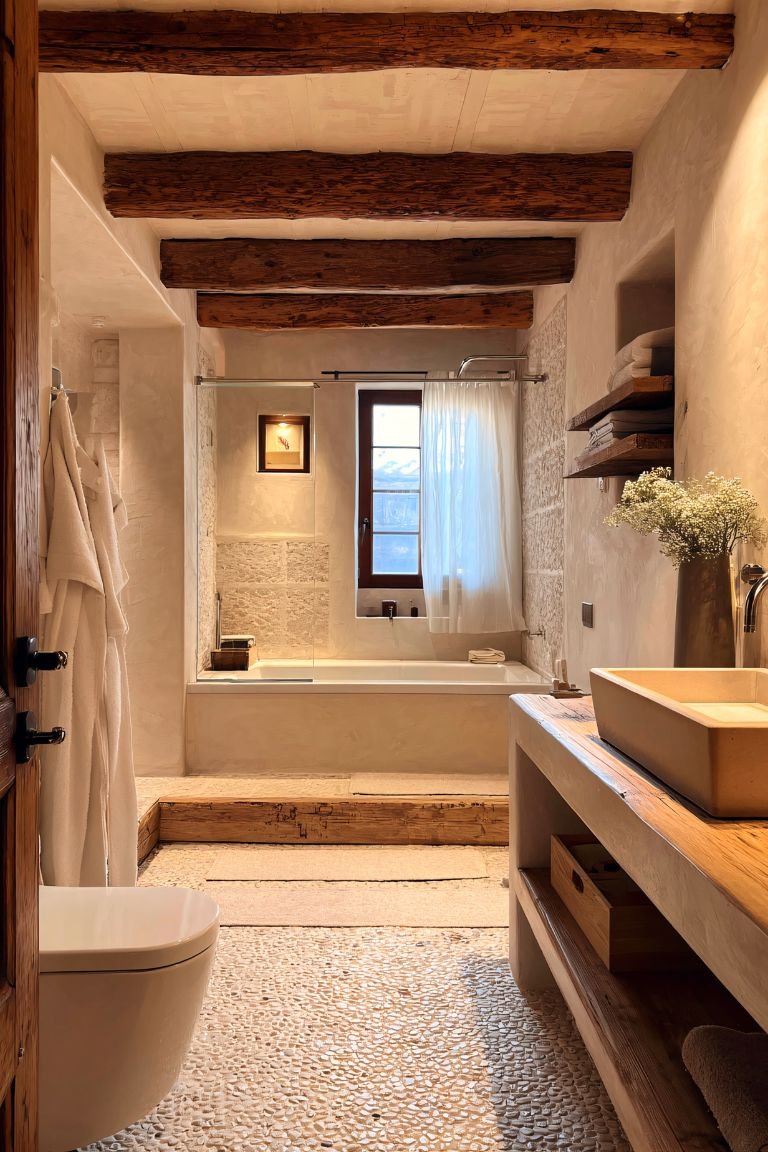
One of the key secrets behind a spa-like bathroom isn’t just color, layout, or lighting — it’s texture. Thoughtful texture layering creates depth, warmth, and sensory richness that make a bathroom feel intentional and luxurious without relying on trendy finishes.
Texture impacts how a space feels underfoot, how light interacts with surfaces, and how elements relate to one another visually and physically. When layered well, textures help a bathroom feel calm, cohesive, and deeply satisfying to use.
Before layering textures, you may find it helpful to review broader design strategies in Minimal vs Warm Bathroom Design: Finding the Right Balance and practical lighting ideas in Why Bathroom Lighting Matters More Than You Think. Both support the foundation for layering textures successfully.
Why Texture Matters in Spa-Like Design
Texture influences how we *experience* a space — not just how it looks. While color sets mood, texture creates tactile comfort and visual depth. Spa environments use a careful mix of hard and soft surfaces to balance function and comfort.
Most bathrooms have surfaces that are inherently smooth and reflective, such as tile and glass. Adding texture softens these surfaces and makes the space feel more approachable and personal.
Start With Tactile Flooring
Flooring is the first place most people experience texture. In spa design, the best floors feel grounding underfoot and avoid a slick, cold sensation.
- Matte porcelain tiles — durable with subtle texture
- Natural stone — warm, organic, and rich in tactile variation
- Textured large-format tiles — minimal grout lines with surface interest
Choosing a textured floor doesn’t have to complicate maintenance. Many matte tiles offer slip resistance and gentle surface variation that feel comfortable with bare feet.
Contrast Hard Surfaces With Soft Textiles
Bathrooms naturally include hard surfaces: tiles, glass shower screens, mirrors, and countertops. Introducing soft textiles balances these elements, adding both comfort and visual warmth.
Consider layering:
- Plush bath mats or woven rugs
- Soft, thick towels in neutral tones
- Textured shower curtains rather than flat synthetic ones
Textiles introduce softness that supports both morning routines and relaxing evenings. Matching towel tones to your palette choices — as discussed in Bathroom Color Palettes That Create Calm and Comfort — enhances cohesion.
Add Visual Depth With Wall Finishes
Walls are a major canvas in a bathroom. While smooth tile is common for moisture resistance, you can add dimension with thoughtful texture choices:
- Textured matte tiles on feature walls
- Recessed tile niches lined with patterned or textured tile
- Limewash or plaster finishes (in low-splash zones) for subtle organic texture
These details provide visual layering without dominating the space. Keep contrast subtle so texture adds depth without feeling busy or visually loud.
Balance Materials for a Cohesive Feel
Layering texture is not about random variety — it’s about intentional balance. When pairing materials, think about how each surface relates to the others in both feel and finish.
| Material | Texture Quality | Design Role |
|---|---|---|
| Matte stone | Soft, organic | Grounding and natural |
| Textured ceramic | Subtle surface variation | Visual interest without sheen |
| Warm wood or wood-look | Inviting and tactile | Adds warmth to hard surfaces |
| Woven textiles | Soft and layered | Sensory comfort and warmth |
Use this kind of material pairing to build a sensory experience that feels relaxing and intentional rather than decorative for its own sake.
Textures and Lighting Work Together
Texture and lighting are inseparable. Texture that looks subtle under one lighting condition can become striking under another. For example, matte finishes and textured tiles reflect light differently than glossy surfaces, creating soft shadows that bring dimension.
Layered lighting — ambient, task, and accent — enhances textured surfaces. For lighting guidance that supports both mood and function, refer to Why Bathroom Lighting Matters More Than You Think.
- Accent lighting near textured walls highlights subtle detail.
- Soft ambient lighting helps surfaces feel warm and inviting.
- Task lighting ensures functional clarity without washing out texture.
Understanding how light and texture interact helps you design with nuance instead of relying on broad style trends.
Use Accessories to Add Layered Texture
Accessories are an easy way to introduce texture if you’re hesitant about major surface changes. Thoughtful accessories add layers without permanent commitment.
- Wicker or woven baskets for storage
- Natural stone soap dishes or trays
- Textured ceramic or matte planters for small plants
These elements help break up hard surfaces and bring a sense of tactility that feels warm and sophisticated.
Avoid Overloading With Too Many Competing Textures
While layering is beneficial, too many competing textures can create visual clutter. The goal is harmony, not chaos. Choose a base texture (like matte stone) and add two to three complementary elements (textiles, wood, woven accessories) for balanced layering.
As with patterns in tile, simplicity within variation keeps the space feeling calm and spa-like. Too many varied materials can make the space feel busy — especially in smaller bathrooms.
Final Thoughts
Layering textures is one of the most effective ways to elevate a bathroom from functional to spa-like. When done thoughtfully, texture adds depth, comfort, and sensory richness that supports both daily routines and moments of relaxation.
By pairing matte floors with soft textiles, textured walls with warm lighting, and tactile accessories with clean finishes, you create a space that feels intentional and restorative — not trendy or overwhelming.