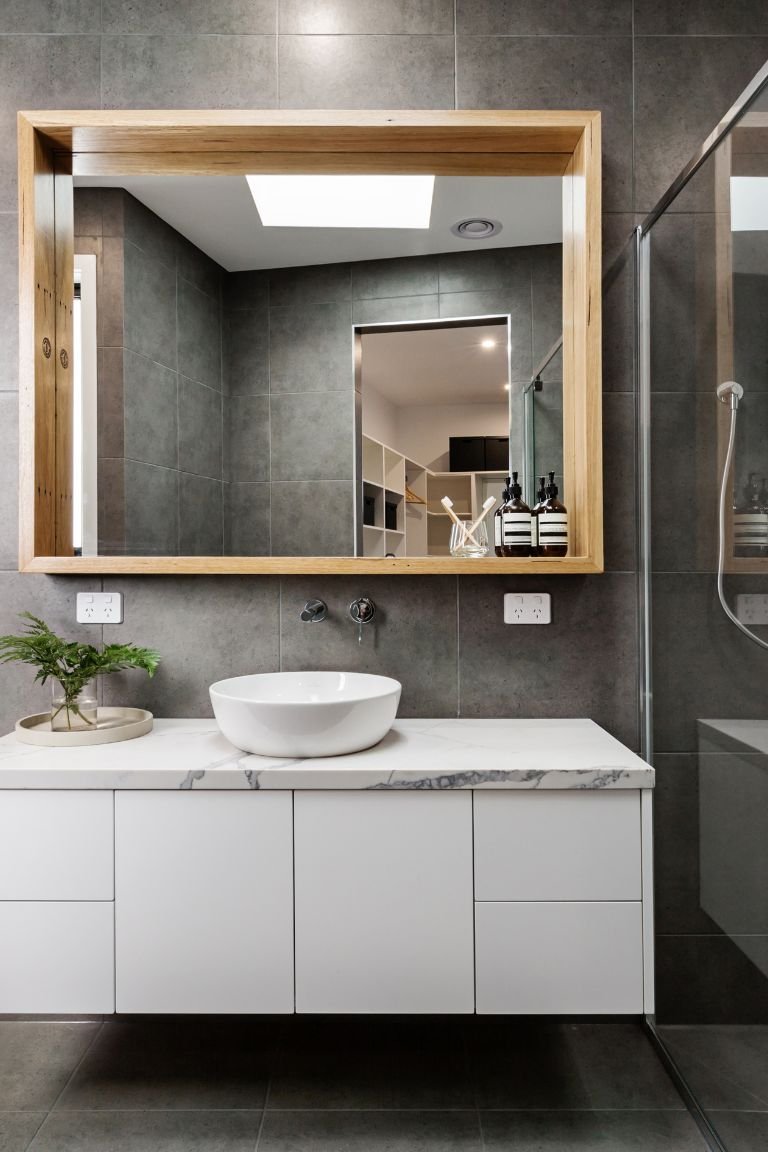
The way your bathroom feels in the morning can set the tone for your day. Likewise, how it feels at night can influence how relaxed you are before bed. Thoughtful design can help your bathroom support both ends of the daily rhythm — calm energy in the morning and soothing ease in the evening.
Getting this balance right isn’t about copying staged images from design sites. It’s about understanding how lighting, materials, layout, and routines interact with your senses throughout the day.
If you’re starting a renovation project, you may find it useful to begin with broad planning principles in How to Plan a Bathroom Renovation Without Feeling Overwhelmed. And if storage or clutter affects your routines, Bathroom Storage Solutions That Keep Spaces Calm and Functional offers practical strategies.
Start With Lighting — The Most Impactful Design Element
Lighting affects circadian rhythms, mood, and how easily you perform tasks like grooming or cleaning. The wrong light in the morning can feel harsh, and overly bright lights at night can make it hard to unwind.
A layered lighting approach — ambient, task, and accent lighting — helps you adjust the mood depending on the time of day. For more detail on lighting design principles, check out Why Bathroom Lighting Matters More Than You Think.
| Time of Day | Lighting Strategy | Effect on Mood |
|---|---|---|
| Morning | Soft neutral task lighting | Promotes focus and readiness |
| Midday | Bright ambient lighting | Clear visibility and alertness |
| Evening | Warm accent + dimmable lights | Calm and relaxing |
Integrating dimmers into your lighting setup gives you control over brightness without changing fixtures or bulbs — a small investment with a big impact on mood and comfort.
Consider Color Palette and Material Warmth
Color and material choices influence how a bathroom feels throughout the day. Cool, stark whites can energize a morning routine but may feel cold at night. Warmer neutrals — soft beiges, greys, or muted earthy tones — feel grounding and less jarring under evening light.
Combining warm materials with a minimal structure, as discussed in Minimal vs Warm Bathroom Design, helps create a space that feels both functional and welcoming. For example, matte stone and wood-grain cabinetry add tactile warmth that supports relaxation without sacrificing clean lines.
Layout Affects How You Move Through Your Routine
The way your bathroom is arranged influences your daily rhythm. A poorly laid-out space can make simple tasks feel awkward or rushed, especially in the morning.
Efficient circulation, clear zones for grooming, bathing, and storage, and surfaces that support fast access to essentials help you move through tasks without disruption. For more on how layout influences routines, see How Bathroom Layout Impacts Daily Routines and Comfort.
- Keep the vanity within easy reach of the door for morning routines.
- Position towel storage near the shower or tub for effortless transitions.
- Reserve quiet corners for relaxation elements like bath accessories or candles.
A layout that supports how you live streamlines movement and reduces stress, making both your morning rush and evening unwind more comfortable.
Textures and Finishes That Soothe the Senses
Sensory comfort goes beyond sight. Textures and finishes influence how spaces feel to the touch and how your brain interprets the environment.
Soft textiles, matte finishes, and natural materials like stone or wood balance visual interest with tactile comfort. These choices support warmth and sensory calm without overwhelming a space.
For example, a matte tile underfoot feels warmer and less clinical than glossy surfaces. Woven towels and bath mats introduce softness that is both functional and comforting.
Use Mirrors Strategically
Mirrors are essential in bathrooms, but their role extends beyond reflection. They help distribute light, making spaces feel brighter in the day and more open overall.
Large mirrors above vanities visually expand the space and can reflect both natural and artificial light. Mirrored storage, such as recessed cabinets, keeps essentials out of sight while increasing perceived openness.
In compact bathrooms, mirrors can make a significant difference in how calm and organized a space feels throughout the day.
Incorporate Scent and Sound for Mood Transitions
A calm morning bathroom can benefit from clean, fresh scents like citrus or eucalyptus — energizing without being overpowering. At night, softer scents like lavender or cedar can enhance relaxation.
Similarly, sound impacts comfort more than many people realize. Quiet fans, soft music grooves, or water features (like a gentle rain shower head) help establish a mood that supports your routine.
These sensory layers don’t dominate the space but subtly enhance your experience — making routines feel more intentional and less rushed.
Keep Counters Clear to Support Calm
A cluttered vanity interrupts visual continuity and can make the space feel chaotic — especially in the morning. Use concealed storage solutions like drawers, recessed shelves, or cabinets to keep daily essentials organized.
This strategy not only supports a tidy environment but also reduces cognitive load — the mental effort your brain uses to process visual information — helping you start and end the day with a clearer mindset.
For more on functional storage solutions, check out Bathroom Storage Solutions That Keep Spaces Calm and Functional.
Final Thoughts
Designing a bathroom that feels calm in the morning and relaxing at night is about rhythm, not rigid rules. It’s about understanding how light, layout, textures, and sensory cues affect your experience at different times of day.
By prioritizing layered lighting, warm materials, thoughtful flow, and sensory comfort, you create a space that supports daily routines while nurturing wellbeing. A well-designed bathroom becomes more than a functional room — it becomes a daily rhythm that feels purposeful, peaceful, and restorative.