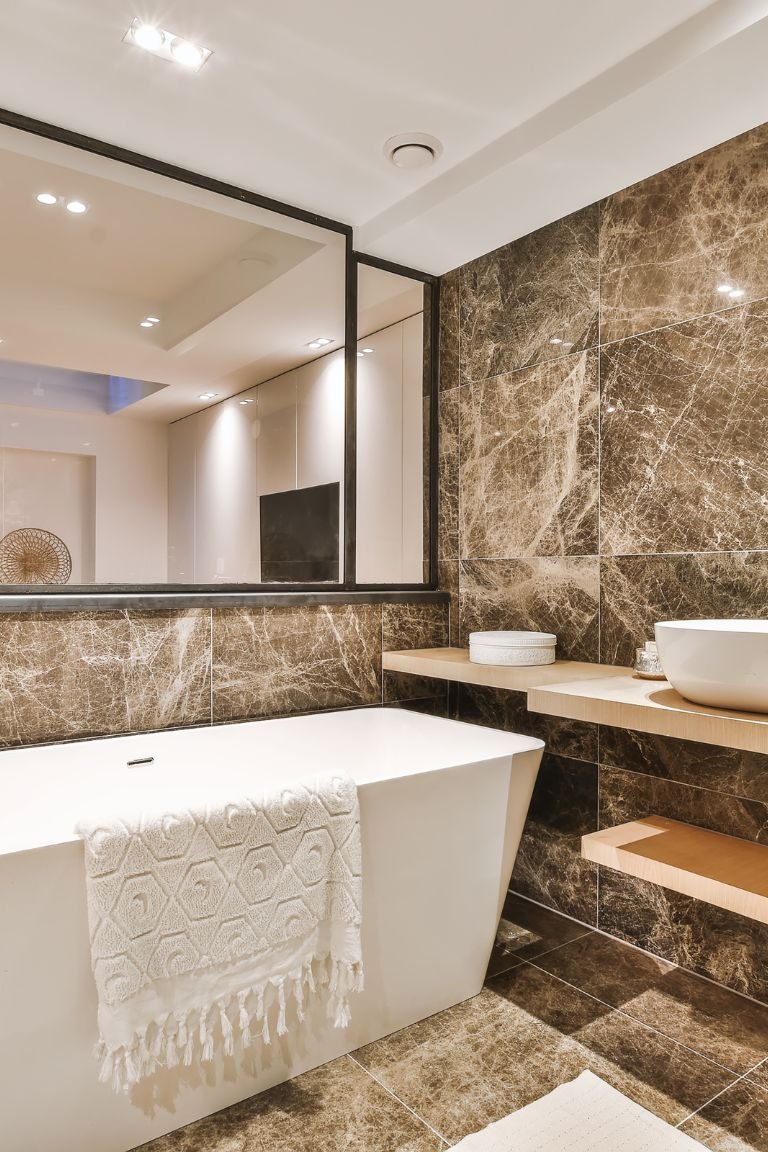
A bathroom renovation is a significant investment — not just in money, but in time and energy. Once the project is complete, the last thing you want is materials that look dated, wear prematurely, or require constant maintenance.
Choosing bathroom materials that age well over time isn’t about avoiding all trends — it’s about making smart selections that balance durability, timeless appeal, and everyday functionality. The goal is a bathroom that continues to feel both comfortable and relevant years after installation.
If you haven’t already read our foundational posts like How to Plan a Bathroom Renovation Without Feeling Overwhelmed, Small Bathroom Design Ideas That Feel Calm and Uncluttered, or Why Bathroom Lighting Matters More Than You Think, those are great starting points to establish a strong design foundation.
Below, we break down materials in key bathroom zones and explain why they work well long-term — both visually and functionally.
1. Flooring Options That Stand the Test of Time
Bathroom floors endure heavy use, moisture, and daily wear. Choosing a material that balances durability, slip resistance, and timeless design should be a top priority.
| Material | Benefits | Considerations |
|---|---|---|
| Porcelain Tile | Highly durable, water-resistant, many classic styles | Cool underfoot; best with area rugs for warmth |
| Natural Stone (e.g., slate, limestone) | Elegant, ages gracefully, unique patterns | Requires sealing and care |
| Luxury Vinyl Tile (LVT) | Waterproof, warmer underfoot, budget-friendly | May not add as much resale value |
| Cement Tile | Timeless patterns, versatile | Needs sealing and periodic maintenance |
Porcelain tile remains a reliable go-to because it resists water and heavy use while offering many styles that don’t feel trend-dependent. Natural stone adds character but needs sealing and awareness of moisture exposure. Luxury vinyl is a strong option for renters or budget-minded renovators who still want good performance.
2. Wall Materials That Stay Fresh and Functional
Bathroom walls see humidity, splashes, and cleaning chemicals every day. The best choices are easy to care for and resist discoloration or damage over time.
- Matte porcelain or ceramic wall tiles — classic and easy to clean
- Large-format tiles — fewer grout lines means less maintenance
- Water-resistant paint — good in low-splash zones; pair with tile around showers
Large-format tiles, especially in matte finishes, have a timeless quality that avoids the glossy “trend” look of past decades. When combined with well-sealed grout and quality caulking, these choices stay fresh longer and reduce visible wear.
3. Vanities and Countertops Built for Longevity
The vanity often becomes the centerpiece of a bathroom, so the materials here need to balance style and durability.
| Material | Why It Works Over Time | Long-Term Tip |
|---|---|---|
| Solid Wood or Veneer Cabinets | Classic warmth and can be refinished | Avoid direct water contact on exposed wood |
| Quartz Countertops | Stain-resistant, minimal upkeep | Avoid placing hot styling tools directly on surface |
| Marble Countertops | Elegant, unique veining | Requires sealing and careful maintenance |
| Floating Vanities | Modern, makes bathrooms feel larger | Ensure strong wall anchoring |
Quartz remains one of the most practical countertop materials because of its long-term resistance to stains and scratches. Solid wood or wood-veneered cabinets add warmth and can be refreshed over time with new hardware or refinishing. Marble delivers luxury but requires ongoing care.
4. Shower and Tub Materials That Age Gracefully
In showers and tubs — where water exposure is constant — choosing the right surfaces is essential for long life and low maintenance.
- Acrylic or fiberglass shower pans — durable with proper installation
- Cultured marble surrounds — smooth and easy to clean
- Tile surrounds — long-lasting when properly sealed
Tile surrounds with well-sealed grout can last many years with minimal issues. Acrylic bases are forgiving, easy to install, and clean. With showers, water control and proper waterproofing matter just as much as surface materials.
5. Fixtures and Hardware That Stay Relevant
Fixtures and hardware are like jewelry in a bathroom. While they’re easier to replace than tile or vanities, choosing finishes that age well saves time and supports a cohesive long-term design.
| Finish | Why It Ages Well | Style Tip |
|---|---|---|
| Brushed Nickel | Conceals water marks and fingerprints | Pairs with both warm and cool palettes |
| Matte Black | Modern, high-contrast without feeling trendy | Works well with natural or neutral designs |
| Polished Chrome | Classic and reflective | Needs frequent cleaning to avoid spots |
| Soft Brass | Warm and timeless without glaze | Coordinate with other metals for continuity |
Brushed finishes like brushed nickel and soft brass are practical because they conceal wear and fingerprints better than high-gloss options. Matte black continues to hold popularity because of its contrast potential without reading as “trendy.”
6. Grout and Sealants Matter More Than You Think
Even the best tiles or surfaces can age poorly if grout yellows or sealant fails. Investing in quality grout and routine resealing helps maintain both appearance and waterproofing.
- Choose grout colors that complement tile rather than stark contrasts
- Use epoxy grout in high-moisture zones to reduce staining
- Reseal grout every 1–3 years if not using epoxy
These steps prevent visible discoloration and help preserve pristine surfaces longer.
Final Thoughts
Choosing bathroom materials that age well over time doesn’t require sacrificing style for practicality. In fact, the most successful long-lasting bathrooms bring both together: classic design, durable surfaces, and smart maintenance planning.
When you select flooring that resists moisture, walls that stay fresh, vanities that feel timeless, and fixtures that conceal wear, you’re creating a space that feels comfortable, functional, and inviting for years — not just a few seasons.